A Humbug President’s Hubris: Take My Mountain Please!

President William McKinley, colorized by the  owner and editor of civilwartalk.com.

President William McKinley, colorized by the owner and editor of civilwartalk.com.

It was President Warren G. Harding who liked to tell a story about his fellow Ohio Republican President William McKinley that revealed his predecessor’s character, about “the pose and love of the dramatic in McKinley that few people realized.”

Young Warren Harding, who once served as Ohio's Lieutenant Governor and heard the funny tale of McKinley as Governor.

Young Warren Harding, who once served as Ohio’s Lieutenant Governor and heard the funny tale of McKinley as Governor.

While he was governor of Ohio, McKinley’s daily act of devotion to his wife Ida, who lived with a number of chronic disabilities, became so legendary that within a short time tourists to Columbus would gather precisely at noon or at three in the afternoon, just to witness for themselves the romantic spectacle of the era, heralded in newspapers from coast to coast.

William "Mack" McKinley.

William “Mack” McKinley.

McKinley would solemnly promenade from his office inside the state capital building twice a day onto the plaza, and slowly remove his tall, silk tophat, or sometimes his large handkerchief.

As onlookers began to murmur in wonder, the governor would then doff his tophat up (or flutter his kerchief) towards a semi-circular window of the residential hotel directly across the street.

McKinley's tophat.(OHS)

McKinley’s tophat.(OHS)

Confined to her figurative Victorian fainting couch in their permanent residential suite there, Mrs. McKinley anticipated this act of Gilded Age chivalry, responding by briefly raising her handkerchief  as a reassurance to him that all was well.

McKinley would bow deeply, his saintly humility preventing him from doing anything but smile gently to the soft applause of awe for such gallantry.

On the Ohio state capital building plaza, a McKinley statue was erected on the spot where he publicly performed his daily devotion tableaux to Ida.

On the Ohio state capital building plaza, a McKinley statue was erected on the spot where he publicly performed his daily devotion tableaux to Ida.

“This was daily ritual with McKinley,” Harding recalled as the best inside joke among his contemporary Ohio legislators, “but some observant persons noticed that this pleasing little exchange of salutation occurred even on days when Mrs. McKinley was known to be in her home in Canton,”

And yet, whenever they were separated from each other for even a day, McKinley was knotted with anxiety and worry about Ida, telephoning, telegraphing and then sometimes even penning a note before he went to sleep.

That was McKinley. He had genuine humility.

And he was a genuine humbug.

Masterful showman, he gave the people what they wanted.

He never bragged, he never boasted, he never yelled, he never demanded. He never failed to show a kindness or courtesy. He never overlooked anyone.

Including himself.

McKinley and Roosevelt campaign poster.

McKinley and Roosevelt campaign poster.

Despite being immediately overshadowed by the wildly colorful Theodore Roosevelt, who as Vice President succeeded to the presidency upon McKinley’s death to assassination and whose adept stagecraft surpassed even McKinley’s, for those who know about long-ago Presidents, the public persona “Mack” so assiduously crafted for himself remains almost entirely intact.

That impressed persona was reflected in the outrage of McKinleyite media, politicians and citizens in reaction to President Obama’s official restoration of the centuries-old native name of Denali or “high one” to the monumental Alaska mountain that was known for nearly one century as “Mount McKinley.”

The Denali-McKinley summit. (Lackenbach, LIFE/Getty)

The Denali-McKinley summit. (Lackenbach, LIFE/Getty)

Denali had been dubbed “McKinley” in 1896 by a gold prospector William Dickey in recognition of the victorious presidential candidate that year.

In 1917, an act of Congress signed and approved into law by Democratic President Woodrow Wilson renamed it officially as “Mount McKinley.”

The most interesting response from the public, however, was one letter which pointed out that were the humble and good William McKinley alive today, he would probably have been the first person to acquiesce to the name change and support the reversion to calling it Denali. That is true. Partially.

McKinley inculcating Cabinet members.

McKinley inculcating.

In all likelihood, President McKinley would have sweetly guffawed to inquiring reporters, “No, no, no I won’t hear of it! The dear old mountain simply must be known by its quaint, old-time name – if that is what the people want!” 

Then, he would have gently repeated this to senators, congressmen, magazine and newspaper editors, ministers, mayors, anyone and everyone who had the power to persuade the public. He would do it one by one, never in a group, affirming he was not worthy of having a mountain named for him – unless they thought the people felt otherwise.

A spate of Sunday editorials and sermons would then have galvanized the nation into guilt about neglecting such a humble man who possessed such godliness and humility.

And Mount McKinley it would have stayed.

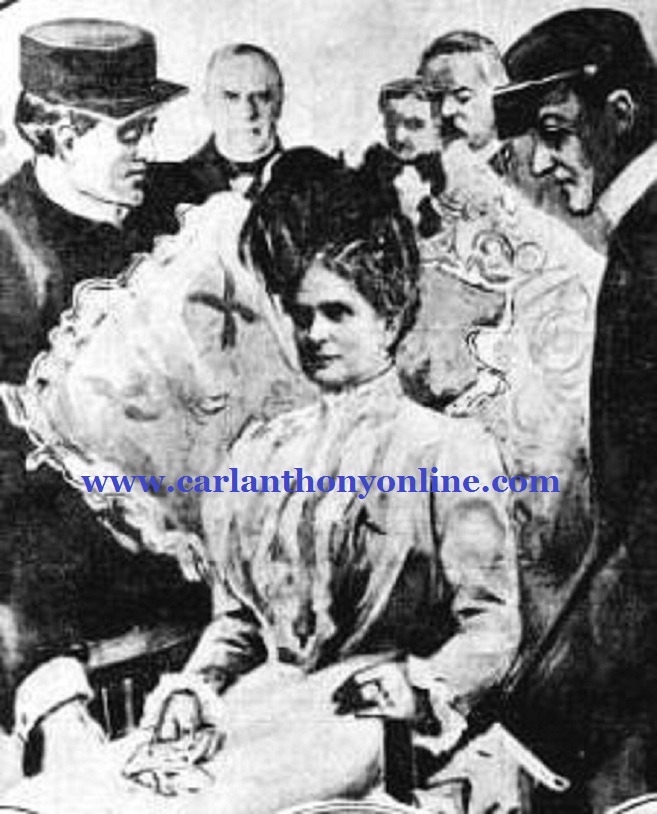
Ida McKinley, the biography by the website author.

Ida McKinley, the biography by the website author.

There is a great difference between being egotistical and appearing egotistical. If the sensitive egotism of presidential candidates seems all too familiar, at least William McKinley didn’t brag openly about how much people loved him.

He let others do that for him.

In my research for the first biography of his wife, Ida McKinley: Turn-of-the-Century First Lady Through War, Assassination & Secret Disability (2013), too many examples turned up of McKinley’s caginess and deft hand at polishing his creamy cameo to write off as a fluke.

On one occasion, during a Chicago banquet, two editors of New Voice, a Prohibition Party  reported that they’d seen the President sipping red wine. It appeared in newspapers but was hardly headline news. To a President who’d carefully built his brand on the base of pious purity, it set off alarm bells.

He never touched the stuff. Hardly.

He never touched the stuff. Hardly.

Despite having to just then manage the first two international wars involving the U.S., the Spanish-American War and the Filipino-American War, McKinley got himself directly involved in rectifying the story.

He directed his wife’s cousin in Chicago, Lafayette Williams to locate the editors who raised the issue of the President raising a glass and insist they write retractions.

Then, working the national Methodist ministry back-channels, he got Mack-friendly preachers who had attended the event to work over the editors. One minister wrote a denial and the other confronted the editors into rethinking what he saw. Maybe, they recanted, it really was just a wine-colored glass of water he’d seen the President sipping.

McKinley speaking in Memphis on April 30, 1901.

McKinley speaking in Memphis on April 30, 1901.

As invoice receipts and thank you notes prove, McKinley did drink claret wine but at a public function, he almost certainly was drinking water. But if it took a mallet to kill a fly, he’d see to it the fly was smashed into obliteration.

On another occasion, during one of his railroad tours through the southern states, McKinley encountered an old Confederate Army veteran who privately presented him with some relics of his service during the Civil War, and a letter explaining it was a gift of peaceful friendship.

It was too good a story about how good he really was for McKinley not to use.

Called by his wife, friends and associates as “the Major,” for his Union Army rank,  this President strove to reduce regional friction lingering some thirty years after the Civil War ended, McKinley got Cortelyou on the case again, shaping a narrative for eager reporters that enlarged the small gesture into significant proof of the President’s successful in healing the nation.

McKinley speaking from his front porch.

McKinley speaking from his front porch.

Not unlike a certain candidate who can’t help trumping his own praises, McKinley was also a one-man show – save for the fact that he didn’t show that.

During his 1896 campaign, realizing that opponent William Jennings Bryan had far greater appeal as a public speaker than he did, McKinley refused to go deliver speeches among voters from the back platform of a whistlestop train.

He gave them instead from the front porch of his home, claiming he made the sacrifice to spare his wife the ordeal of campaigning out on the trail. Even though Ida McKinley had always thrived during long, arduous train journeys.

The McKinley "campaign house."

The McKinley “campaign house.”

Even his “home, sweet home” used for his campaigns was humbug. He and Ida had barely lived there for the first two years of their marriage, before their infant daughter died there and they moved into her father’s home, and then occupied residential hotel suites.

When the old house became available for rent just as McKinley was launching his presidential campaign, he immediately leased it and directed a friend’s wife to furnish it as a stage setting, simulating the sense that it had remained his home for a quarter of a century.

Ida McKinley in her parlor that was furnished to suggest a patina of time to it, when it fact it was staged with chosen items to frame her husband's candidacy.

Ida McKinley in her parlor that was furnished to suggest a patina of time to it, when it fact it was staged with chosen items to frame her husband’s candidacy.

Strategically positioned around the rooms were Victorian furbelows, touchstones intended to symbolize his biography, like a table made of wood from various Ohio counties to remind visitors he’d been governor, a black leather sofa used in his congressional office, swords to prompt tales of his heroic Civil War career (he actually ran a food wagon), American-made vases to suggest his famous protective tariff, and the empty child’s rocking-chair of the absent “angel baby” Katie McKinley.

Mixed in with family photos were those of legendary military leaders, popular political figures, and opera stars, prompting a subliminal suggestion that they were as close as kin.

McKinley seated on his famous congressional black leather chaise sofa.

McKinley seated on his famous congressional black leather chaise sofa.

“Ida’s parlor,” was used as a public reception area, while lines streamed down the hall able to examine the cordoned-off but open-doored “Major’s office.”

In this way, hundreds of thousands of individuals coming there as part of larger voter delegations were deluded into a palpable sense of privilege that they’d been given a rare glimpse into the private life of a potential president.

The White House bedroom of the McKinleys.

The White House bedroom of the McKinleys.

Meanwhile, the McKinleys ate and slept and commiserated alone together in a large back bedroom. Some sixty years before Walt Disney concocted “Main Street USA,” it was a brilliant bit of nostalgia to move voters.

All of it was conceived and executed by McKinley. None but insiders knew that.

McKinley was an incessant worker, even more so during his conducting of the Spanish-American War and Filipino-American War.

McKinley was an incessant worker, even more so during his conducting of the Spanish-American War and Filipino-American War.

U.S. Naval battleship, part of the "great white fleet" during the Spanish-American War.

U.S. Naval battleship, part of the “great white fleet” during the Spanish-American War.

The argument that McKinley was a good President because he led the nation into a successful war against Spain and established the U.S. as a world power is countered by the case that he seized control of its former colony, the Philippine Islands and unleashed bloody, horrific carnage upon its people as well as American servicemen.

His trademark empathy for those who suffered by no fault of their own was absent in any of his messages to Congress in support of annexing the Hawaiian kingdom as U.S. territory.

Not unlike a certain Republican candidate who composes his own Twitter messages and shows a facile independence with social media, McKinley embraced all the available technology of his times.

Even while making a rail trip to the West Coast, McKinley had telegraph communication at his disposal, as seen here in "The Den" which served as his "field headquarters" field" on May 8, 1901. Also his dressing room, reading room, smoking room and informal reception room.

Even while making a rail trip to the West Coast, McKinley had telegraph communication at his disposal, as seen here in his “field headquarters” on May 8, 1901. Also his dressing room, reading room, smoking room and informal reception room.

McKinley kept abreast in nearly real-time with fighting in the Philippines by using instantaneous international telegraph (and drinking cocaine-laced soft drinks for alertness in the wee hours to be in touch with another time zone).

He was also the first President to appear in a “moving-picture” film, making his initial appearance on celluloid during his 1896 campaign.

In the brief nickelodeon newsreel, McKinley walks stiffly across his lawn, pauses to accept a note he is handed that allegedly informed him of his presidential nomination, tips his tophat and holds it in place (with those massive eyebrows?) to read, and then keeps walking out of the frame.

Here it is, with his 1900 campaign song:

McKinley’s letters and notes are among the rarest of any President for the simple fact that he cautiously avoiding committing his true thoughts to paper, always using a personal messenger to transmit a verbal message to Capitol Hill, for example.

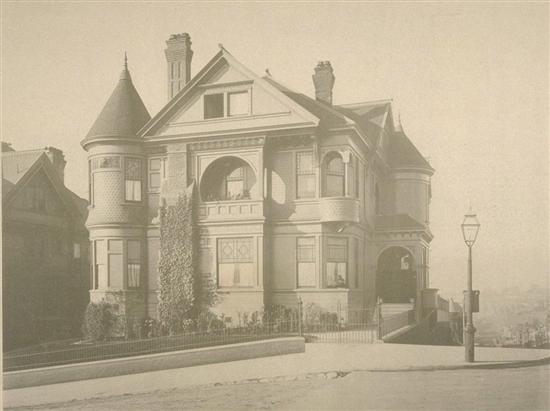
President William McKinley strolling outside the San Francisco White House, at the corner of Clay and Laguna in 1901 - the closest he ever came to Alaskan mountain once informally named for him and recently restored to its original name of Denali.

President William McKinley strolling outside the San Francisco White House, at the corner of Clay and Laguna in 1901 – the closest he ever came to Alaskan mountain once informally named for him and recently restored to its original name of Denali.

To sound out advice, McKinley lit a cigar and would asked one of several advisers to join him outside, since Ida hated cigar smoke. He would consult like this, one on one, ensuring there could never be a second witness to later affirm what he had stated.

Always, McKinley grasped hands sincerely, spoke considerately, and handed out his trademark carnation boutonnière generously.

Lobbyists and legislators all came away from meetings with him believing the President agreed with their viewpoint.

Some of his contemporaries were on to McKinley's use of charm and subtext to control his image and succeed in all his endeavors.

Some of his contemporaries were on to McKinley’s use of charm and subtext to control his image and succeed in all his endeavors.

Many believed the man’s genius was using subtext, not boldface. “He cared nothing about the credit,” said his War Secretary, “but McKinley always had his way.

His secrecy, however, had a dark side.

Physician John N. Bishop, unctuously eager to please the presidential candidate and then President, was willing to suspend medical ethics by sending to McKinley the powerful bromide powders that could abruptly, if temporarily, halt the nerve dysfunction of epileptic seizure that Ida McKinley endured.

Bishop sent the medication on one important condition: he must have frequent and regular written reports of Mrs. McKinley’s symptoms.

The McKinleys acknowledge cheering crowds in Redlands, California.

The McKinleys acknowledge cheering crowds in Redlands, California.

Trusting no others to dispense the medication nor keeping anyone except her father and sister fully informed of the situation, McKinley not only over-applied the bromides but refused to follow through on his promised cooperation.

For three years, McKinley continued his unregulated dispensing of dangerous drugs and failure to comply with medical regulation.

In doing so, he seemed more concerned about potential political damage were details of Ida’s condition to become public knowledge through a leaked letter than he did about the threat of permanent damage to her entire nervous system. Luckily, a responsible navy physician took over.

It is hard not to sometimes perceive that McKinley was for McKinley first.

It is hard not to sometimes perceive that McKinley was for McKinley first.

Considering how dotingly devoted he was to his wife and his perpetual waxing on about her as his priority, one is reluctant to deem McKinley arrogant. In terms of her care, at the least it is fair to say he was far more negligent in terms of her medical care, although that runs utterly counter to the deeply embedded mythology about him.

Perhaps he had become so unthinking about her because he’d come to think so well of himself.

Ignoring Ida McKinley’s concern that he was next on the international anarchist hit list, “Mack” ran for and easily won a second term in 1900.

He adamantly refused to take seriously the concerns of his aides who insisted he permit Secret Service agents and other law enforcement officers to guard him against potential harm as he went into large crowd unprotected.

“Why should I?,” he sniffed with the unmistakable air of hubris, “No one would wish to hurt me.”

The gun used to assassinate McKinley on September 6, 1901. (roadsideamerica.com)

The gun used to assassinate McKinley on September 6, 1901. (roadsideamerica.com)

Mixing freely with the public, McKinley entering the Temple of Music, minutes before he was shot.

Mixing freely with the public, McKinley entering the Temple of Music, minutes before he was shot.

Sure enough, one-hundred and fourteen years ago today, as he was visiting Buffalo’s Pan-American Exposition, President William McKinley was assassinated.

Yet, even when he died eight days later, on September 14, 1901, William McKinley had seemingly conjured full control of how he would be remembered.

Throughout his career, McKinley methodically considered everything, even his seemingly spontaneous words, which were perfected to nurture his persona.

The Major’s tidy mind had even given careful consideration to his own ideal demise.

“I would prefer to go,” he once told a friend when his mask slipped, “as Lincoln went.”

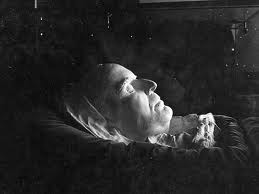
The plaster death mask made of McKinley.

The plaster death mask made of McKinley.


Categories: The McKinleys

Tags: , , ,

1 reply

Trackbacks

  1. Happy 121st Birthday James Thurber |

Leave a Reply